The short answer
A car battery may look simple, but it contains lead, electrolyte, and stored electrical energy. Poor handling can cause burns, sparks, short circuits, or other injuries.
Varta batteries are mainly lead-acid batteries, so they should be handled with care and kept away from heat, flames, and children.
Varta provides Safety Data Sheets (SDS), often called MSDS, that explain battery contents, hazards, handling, storage, and emergency measures. Proper storage also helps prevent deep discharge and battery damage.
What Is an MSDS or SDS for a Varta Battery?
MSDS stands for Material Safety Data Sheet, while SDS means Safety Data Sheet. SDS is the newer and more widely used term. It provides safety information about a product, including possible hazards, safe handling, storage conditions, emergency steps, and disposal information.
For Varta automotive batteries, the SDS is useful when a battery needs to be transported, stored, charged, repaired, or disposed of.
Varta provides SDS documents for different battery types, including wet lead-acid batteries and VRLA batteries. The exact information can vary according to the battery design, so the SDS for the specific product should be used whenever possible.
What Is Inside a Varta Car Battery?
Most Varta automotive batteries use lead-acid technology. The main internal materials include lead-based components and an electrolyte containing sulfuric acid. The battery stores chemical energy and changes it into electrical energy when the vehicle needs power.
The case keeps these materials contained during normal use. However, a damaged or badly handled battery can leak electrolyte. Battery terminals also carry electrical current and can create a spark if they are accidentally connected by a metal object.
This is why a battery should not be treated like an ordinary plastic car part. Understanding its basic construction makes safe handling much easier.
Why Varta Battery Safety Matters
A car battery has several possible hazards. The electrolyte can cause serious burns if it comes into contact with skin or eyes. The battery can also produce hydrogen gas during charging, and hydrogen can form an explosive mixture with air.
There is also a risk of short circuits. A metal tool touching both terminals can allow a large current to flow quickly, creating heat and sparks.
Varta recommends using proper eye, face, and hand protection when working with batteries. It also advises keeping metal tools away from the terminals and never leaning over a battery during testing, boosting, or charging.
How to Handle a Varta Battery Safely
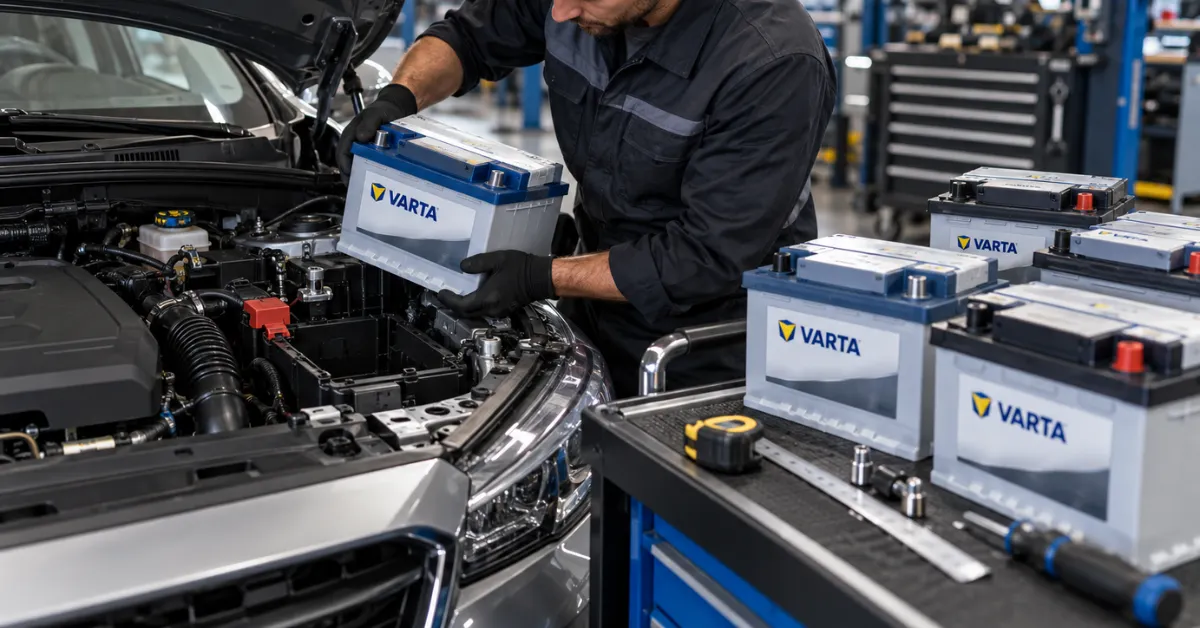
Good handling starts before the battery is lifted or disconnected. Turn the vehicle off, remove the key, and make sure electrical equipment is switched off. Wear protective glasses and suitable gloves, especially when removing or installing a lead-acid battery.
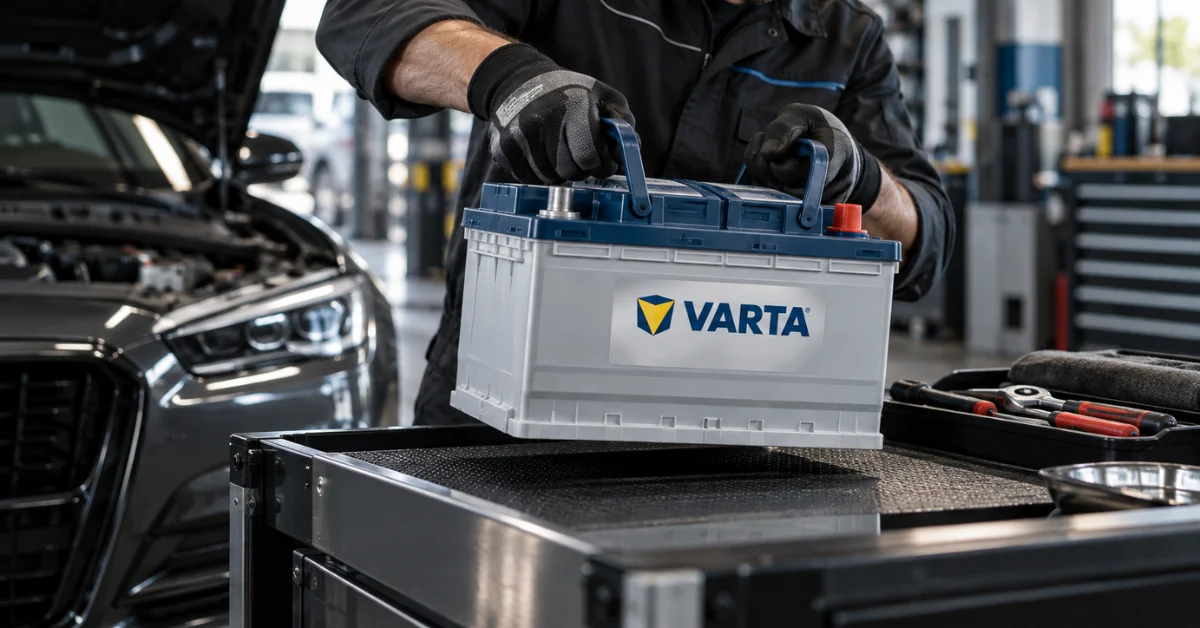
Keep the battery upright when carrying it. Do not drop it, hit the case, or place heavy objects on it. Never lift a large battery carelessly because automotive batteries can be heavy. Check the case, terminals, and cover for damage before installation.
Varta also advises disconnecting the negative cable first when removing a battery because this reduces the chance of a short circuit between the positive terminal and the vehicle body.
Keep Battery Terminals Safe
Battery terminals need special care because they are the points where electrical power enters and leaves the battery. Dirt, corrosion, or loose connections can increase resistance and affect battery performance. Heavy corrosion can also create a safety concern.
Never place a wrench, screwdriver, wire, or other metal object across the positive and negative terminals. This can cause a short circuit, heat, and sparks. Keep terminal covers in place when provided.
If corrosion appears, the battery should be disconnected before cleaning. Varta recommends removing terminal corrosion carefully and using suitable protection after cleaning to help prevent it from returning.
How to Store a Varta Battery Safely?
Correct storage is important when a battery is kept outside a vehicle for an extended period. Varta recommends a cool, dry, and adequately ventilated storage area. The battery should remain upright and away from direct sunlight, rain, flames, and heat sources.
Temperature is also important. Varta states that an annual average storage temperature of about 15°C is suitable, while short-term storage temperatures above 25°C can affect battery life.
High temperatures speed up chemical reactions inside a lead-acid battery and can increase degradation. A dry environment also helps prevent moisture from creating unwanted electrical leakage between terminals.
Should a Stored Varta Battery Be Charged?
Yes, a stored battery should be checked regularly because lead-acid batteries naturally lose charge over time. If the charge becomes too low, deep discharge can cause permanent capacity loss and may make recovery difficult.
Varta recommends fully charging a battery before storage. Its storage guidance says the voltage should be checked regularly, with recharging recommended when the voltage falls to around 12.5V or lower under the stated storage conditions.
The exact charging process should follow the battery and charger instructions. Use a charger suitable for the battery type, especially when dealing with AGM or EFB technology. Avoid uncontrolled overcharging because it can damage the battery.
How to Charge a Varta Battery Safely
Charging requires extra care because lead-acid batteries can release hydrogen gas. The charging area should have good ventilation, and there should be no cigarettes, flames, or other ignition sources nearby.
Before charging, switch off the vehicle's electrical equipment. If the battery is removed, keep it upright on a stable surface. Use a charger that matches the battery's voltage and technology. Varta advises connecting the charger to the battery before connecting it to the mains.
For removal, switch the charger off first and then disconnect the cables. Never use a charging method that is not suitable for the battery type, particularly with AGM and EFB batteries.
Can You Add Water to a Varta Battery?
This depends on the battery design, but modern maintenance-free Varta automotive batteries should not be opened or topped up by the vehicle owner. Varta specifically warns users not to add water to its maintenance-free automotive batteries and not to remove pressure relief valves.
Older or serviceable lead-acid batteries may have different maintenance requirements, but these should be handled according to the manufacturer's instructions. Never assume that a battery needs water simply because it is a lead-acid battery.
Opening the wrong battery can expose you to electrolyte and can create a safety risk. If you are unsure about the battery type, ask a qualified technician to inspect it.
What to Do If Battery Acid Leaks?
A leaking battery should not be handled like a normal battery. Acid leakage can cause chemical burns and may indicate damage to the case, cover, or internal parts. Do not touch leaked material with bare hands and do not continue using a visibly damaged battery.
Keep people away from the area and avoid contact with the liquid. If battery acid reaches the skin, rinse the affected area thoroughly with clean water and seek medical attention.
If it enters the eyes, rinse immediately with plenty of clean water and get urgent medical help. Varta advises avoiding direct contact with escaped battery acid and recommends professional attention for damaged batteries.
What to Do If a Battery Gets Damaged
Physical damage can include cracks, swelling, broken terminals, a damaged cover, or signs of electrolyte leakage. Such damage should never be ignored. A damaged battery may not be safe to charge, install, or transport.
Do not try to repair a cracked battery case with glue or another household material. Do not open the battery to inspect its internal plates. Keep it in a safe, ventilated location away from ignition sources and arrange for professional handling.
Varta advises replacing batteries that show damage to the terminals, case, or cover. A workshop can determine the safest way to remove and handle the damaged unit.
How to Dispose of an Old Varta Battery
An old car battery should never be placed in normal household waste. Automotive batteries contain materials that require controlled collection and recycling.
Varta states that car batteries are hazardous waste and should be taken to suitable workshops or recycling centres.
Recycling also allows valuable materials to be recovered instead of sending them to landfill. Varta reports that around 99% of a battery can be recycled and that about 80% of a new battery can consist of recycled material.
Local disposal rules can differ, so drivers should use an approved battery collection point, workshop, or recycling service in their area.
How to Transport an Old Car Battery?
An old battery should be transported carefully to prevent leakage, movement, and accidental short circuits. Keep it upright and secure it so it cannot fall over during transport. The terminals should be protected against contact with metal objects.
Do not place loose tools, wires, or other conductive items on top of the battery. A damaged or leaking battery needs additional care and should be handled by a suitable professional or recycling service. If a battery has visible damage, do not put it in a normal vehicle and drive around with it without first checking the correct handling requirements. The product's SDS can provide additional transport and hazard information.
Varta Battery Safety Checklist for Car Owners
Simple safety habits can prevent many common battery accidents. Before working on a Varta battery, take a few minutes to check its condition and prepare the work area. This is especially important when removing, charging, or storing the battery.
Use this basic checklist:
- Wear protective glasses and suitable gloves.
- Turn the engine and electrical equipment off.
- Keep metal tools away from the terminals.
- Disconnect the negative terminal first when removing the battery.
- Keep the battery upright during handling.
- Charge only in a well-ventilated area.
- Keep flames, cigarettes, and sparks away.
- Do not open a maintenance-free battery.
- Do not add water unless the manufacturer's instructions specifically require it.
- Do not use a damaged or leaking battery.
- Store batteries in a cool, dry location.
- Send old batteries to an approved recycling or collection point.
These simple steps follow the main safety advice provided by Varta for automotive batteries.
What Does the Varta SDS Tell You?
The SDS is useful when you need more detailed safety information than the instructions printed on the battery. It can explain the product's composition, hazards, safe handling and storage methods, first-aid measures, firefighting information, accidental release procedures, and disposal guidance.
The important point is that an SDS is not a general guide for every battery. Different battery constructions can have different safety information. Varta provides separate SDS documents for battery types such as wet lead-acid and VRLA products.
If you are handling a particular battery for work, storage, transport, or disposal, use the SDS that matches that specific product.
Why UAE Drivers Need Extra Battery Safety Care
Hot weather makes correct battery storage and maintenance especially important in the UAE. High temperatures can speed up chemical reactions inside lead-acid batteries and contribute to faster deterioration.
A battery stored in direct sunlight or near a heat source can face even greater thermal stress. For UAE drivers, batteries should be kept away from unnecessary heat when they are outside the vehicle.
Regular inspections can also identify corrosion, loose terminals, physical damage, or charging problems. If a battery is being stored for a long period, keeping it charged and checking its voltage regularly can help prevent deep discharge and unnecessary damage.
When Should You Let a Professional Handle the Battery?
Some battery jobs are simple, but others should be left to a trained technician. Professional help is sensible when the battery is leaking, damaged, swollen, badly corroded, or difficult to remove. It is also useful when the vehicle has a complex electrical system or requires battery registration after replacement.
Modern cars may need electronic systems to be recalibrated after a battery replacement. Varta notes that vehicles with many technical systems or start-stop technology may benefit from professional battery replacement.
A technician can also test the battery, charging system, and electrical connections instead of replacing the battery without finding the actual cause of the problem.
What to Check Before You Buy a Varta Battery
Choosing a car battery involves more than picking a well-known brand. The battery must match your vehicle's electrical needs, size, and charging system. If you plan to buy Varta battery products, first check the battery type recommended for your car. Modern vehicles may need AGM or EFB technology, while some older cars use standard flooded batteries.
Check these details before buying:
- Voltage: Most passenger cars use a 12V battery.
- Ah capacity: This shows the battery's rated energy storage capacity.
- CCA: Cold Cranking Amps indicate starting power under standard test conditions.
- Battery technology: Check whether your car needs standard, EFB, or AGM technology.
- Size: The battery must fit correctly in the battery tray.
- Terminal layout: Make sure the positive and negative terminals are positioned correctly.
- Warranty: Check the warranty terms before making your purchase.
- Manufacturing date: A fresh battery is generally preferable to one that has been stored for a long time.
A professional battery test can also confirm which replacement is suitable for your vehicle.
Conclusion
A Varta car battery is designed for reliable vehicle use, but it still contains materials and stored energy that require careful handling.
Use protective equipment, avoid sparks and metal contact, keep the battery upright, charge it in a ventilated area, and never ignore leaks or physical damage. Proper storage also means keeping the battery cool, dry, charged, and protected from heat.
When a battery reaches the end of its service life, do not put it in household waste. Take it to an approved workshop or battery recycling point so its materials can be recovered safely. Varta's SDS documents should also be checked when detailed safety or emergency information is needed.
For safe Varta battery replacement, testing, installation, and disposal support in the UAE, contact Battery Zone UAE. Professional assistance can help you choose the right battery and handle the old one safely.
Battery trouble in Dubai? We come to you.
On-site testing, replacement and roadside help, 24/7 across the city.