The short answer
Choosing a car battery is not as simple as picking one that fits under the bonnet. The battery must match your vehicle's power needs, physical size, technology, and charging system. A wrong choice can cause starting problems, charging issues, or errors in modern electrical systems.
The Varta Battery Finder helps drivers identify a suitable battery by using vehicle details such as make, model, engine, and year. The process can also be checked against the battery currently fitted to the car. Understanding each step makes it easier to find the right Varta battery and avoid buying an unsuitable replacement.
Why Finding the Exact Battery Matters
Modern vehicles have different electrical requirements. A small petrol car may use a standard lead-acid battery, while a vehicle with a start-stop system may need an EFB or AGM battery.
Luxury cars can have even higher electrical demands because of features such as electric seats, advanced safety systems, large infotainment screens, and multiple control units.
The battery must also have the correct voltage, capacity, cold cranking amps (CCA), dimensions, terminal layout, and mounting style.
Using a battery with the wrong specifications may affect starting performance or the vehicle's charging system. This is why checking the exact vehicle application is more reliable than choosing a battery based only on its size or appearance.
Step-by-Step Varta Battery Finder Guide
The following steps can help you move from basic vehicle information to the correct battery specification. Always compare the Finder result with your vehicle handbook and the battery currently installed, especially if the vehicle has been modified or has special electrical equipment.
Step 1: Identify Your Vehicle Brand
Start by selecting the vehicle manufacturer. This could be brands such as BMW, Mercedes-Benz, Toyota, Nissan, Volkswagen, Ford, Honda, or another manufacturer.
The brand matters because different manufacturers use different battery sizes and technologies. Even two cars with similar engine sizes can require different batteries. Selecting the correct manufacturer narrows the search and prevents unrelated battery models from appearing in the results.
Step 2: Select the Vehicle Model
After choosing the brand, select the exact vehicle model. Do not choose a similar model simply because it looks the same or has a similar name.
Manufacturers can use different battery specifications across their model ranges. For example, a compact version and a larger version of the same vehicle may have different electrical demands. Selecting the exact model helps the battery finder identify the correct application and reduces the chance of choosing an incompatible product.
Step 3: Enter the Model Year
The next step is to select the vehicle's production or model year, depending on the information requested by the battery finder.
This step is important because manufacturers can change battery specifications during a model's production period. A vehicle sold under the same model name for several years may receive different electrical systems, engines, or start-stop features. The model year helps narrow the result to the battery applications associated with that particular version.
Step 4: Choose the Correct Engine
Select the engine that matches your vehicle. This may require information about engine size, fuel type, power output, or engine code.
Engine choice can affect battery requirements because different engines can have different starting loads. Diesel engines, for example, can require strong starting performance. Some larger engines may also use batteries with higher capacity or CCA ratings. If you are unsure about the engine specification, check your registration documents, owner's manual, or vehicle identification information.
Step 5: Check the Start-Stop System
Determine whether your vehicle has a start-stop system. This feature automatically switches the engine off when the car stops and restarts it when the driver moves away.
Vehicles with start-stop technology often need batteries designed for repeated engine starts. EFB and AGM batteries are commonly used for these applications. An ordinary battery may not be suitable as a replacement where the manufacturer requires EFB or AGM technology.
Do not downgrade an AGM or EFB vehicle to a standard battery simply because the physical dimensions appear similar.
Step 6: Review the Recommended Varta Battery
Once the vehicle information has been entered, review the battery recommended by the Finder. Look at the complete product information rather than relying only on the battery name.
Important details can include:
- Battery technology
- Voltage
- Capacity in Ah
- Cold Cranking Amps
- Physical dimensions
- Terminal arrangement
- Hold-down or base type
- Product range
- Vehicle application
These specifications help confirm whether the recommended battery is suitable for the vehicle.
Step 7: Compare the Result With Your Existing Battery
Before buying a replacement, compare the Finder result with the battery already installed in the vehicle. Check the label for the Ah rating, CCA, battery technology, dimensions, and model number.
This comparison can reveal whether the existing battery is the original specification or a previous replacement. If the current battery differs from the Finder result, do not automatically assume that one is wrong. The vehicle may have had an upgraded battery, a previous battery change, or another electrical modification.
A technician can check the vehicle and confirm which specification should be installed.
Step 8: Check Battery Size and Terminal Position
A battery can have the correct electrical specifications but still fail to fit the vehicle correctly. Measure the battery and check the position of the positive and negative terminals.
The battery must sit securely in the correct tray and connect to the vehicle cables without stretching or forcing them. The hold-down system must also secure the battery properly.
Never modify the battery tray or cables just to make an unsuitable battery fit. A secure physical installation is an important part of battery safety and reliable operation.
Step 9: Confirm AGM, EFB, or Standard Technology
Battery technology is one of the most important parts of the selection process. Standard flooded batteries, EFB batteries, and AGM batteries have different designs and operating characteristics.
Standard batteries are suitable for many vehicles with normal electrical demands. EFB batteries provide improved cycling performance for certain start-stop vehicles. AGM batteries are designed for vehicles with higher electrical demands and more intensive start-stop use.
If the vehicle manufacturer specifies AGM, use AGM rather than changing to a lower battery technology. The same principle applies to vehicles designed around EFB technology.
Step 10: Check the Battery's Manufacturing Date
After identifying the correct battery model, check its manufacturing or production information before purchase. A battery that has spent a long time sitting in poor storage conditions may not be in the same condition as a fresh, properly stored battery.
Ask the seller about stock age and storage conditions if the production date is unclear. This is particularly useful in hot climates such as the UAE, where high temperatures can speed up battery ageing.
Step 11: Check the Warranty and Seller
Before you buy Varta battery products, check the warranty offered by the seller and confirm that the battery is genuine. Keep the purchase invoice and warranty documents in case a claim is needed later.
A reliable seller should be able to provide clear product information and help confirm the battery's application. Avoid choosing a battery only because it has a lower price. The correct model, fresh stock, proper storage, and warranty can all matter when buying a replacement.
Step 12: Confirm Whether Battery Registration Is Required
Some modern vehicles need the new battery to be registered or coded after replacement. This is different from simply installing the battery.
Battery registration allows the vehicle's battery management system to recognise the new battery. Some vehicles may also require coding when battery capacity or technology changes. This is especially important for cars with advanced battery management systems.
If your vehicle requires registration, installation by a technician with suitable diagnostic equipment can help ensure the charging system is set up correctly.
What Information Do You Need Before Using the Varta Battery Finder?
Having the right vehicle information makes the search faster and more accurate. If possible, keep the following details available:
| Information | Why It Matters |
|---|---|
| Vehicle brand | Identifies the manufacturer |
| Model | Narrows down the vehicle application |
| Model year | Helps identify the correct generation |
| Engine | Determines starting and electrical requirements |
| Fuel type | Can affect battery selection |
| Start-stop system | Helps identify EFB or AGM requirements |
| Existing battery model | Allows direct specification comparison |
| Ah rating | Shows rated battery capacity |
| CCA rating | Indicates starting power |
| Battery dimensions | Confirms physical fit |
If some information is missing, the vehicle identification number (VIN) and existing battery details can help a professional confirm the correct application.
Common Mistakes When Choosing a Varta Battery
One common mistake is choosing a battery based only on its physical size. Two batteries can look almost identical while having different capacity, CCA, or internal technology.
Another mistake is replacing an AGM battery with a standard battery. This can be unsuitable for a vehicle designed for high cycling demands. Drivers may also ignore the battery's terminal position or choose a battery that does not have the correct base type.
Other mistakes include:
- Selecting the wrong engine version
- Ignoring the vehicle's start-stop system
- Choosing the lowest-priced battery without checking specifications
- Buying old stock without checking its condition
- Failing to register the battery when the vehicle requires it
- Assuming every battery with the same voltage is interchangeable
Taking a few extra minutes to check these details can prevent many battery-related problems.
Varta Battery Finder vs Checking the Existing Battery
The battery finder and the existing battery are both useful sources of information. The Finder uses vehicle application data, while the battery label shows what is currently installed.
Ideally, both should point toward the same specification. If they do not, further checking is needed. The existing battery may have been replaced incorrectly in the past, or the vehicle may have a special configuration.
For this reason, the Finder should be treated as part of the selection process rather than the only check. The owner's manual, vehicle manufacturer information, current battery label, and professional inspection can provide additional confirmation.
Choosing a Varta Battery for UAE Driving Conditions
UAE temperatures can place extra stress on automotive batteries. High heat can speed up chemical reactions inside lead-acid batteries and contribute to faster ageing. Frequent short trips can also prevent the battery from receiving enough charging time from the alternator.
When choosing a battery for UAE driving, correct specification is still the first priority. Do not choose a larger or different battery simply because the climate is hot. Instead, use the manufacturer's recommended battery technology and specifications.
Regular battery testing is also useful. Checking voltage, starting performance, terminals, and the charging system can help identify problems before the vehicle fails to start.
What to Do After Finding the Right Battery
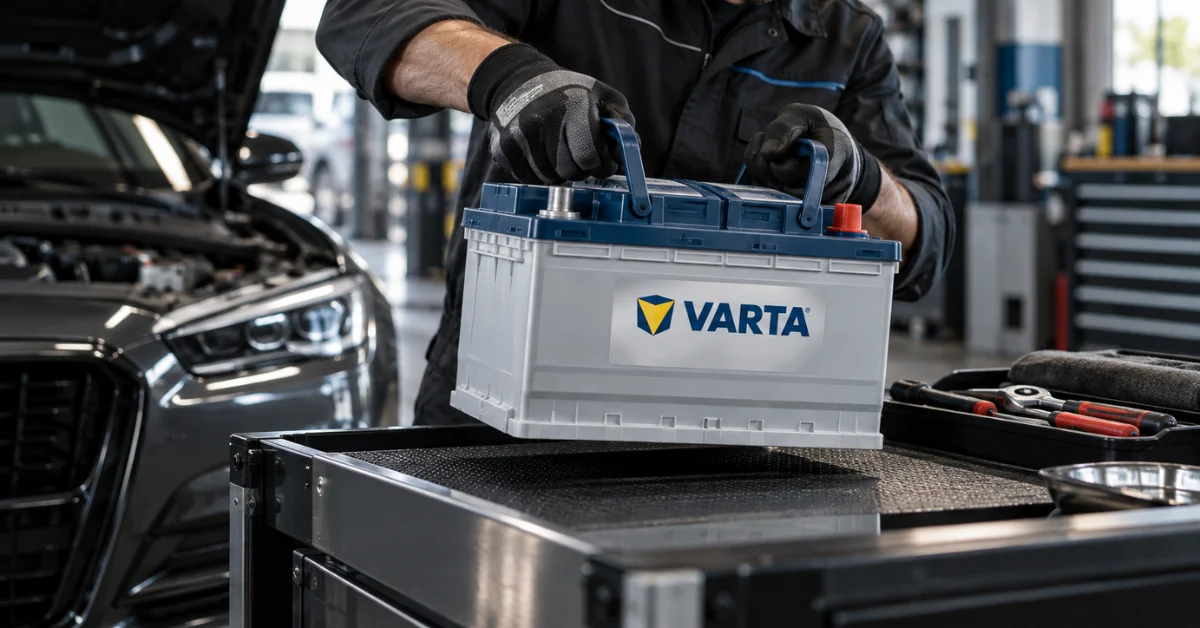
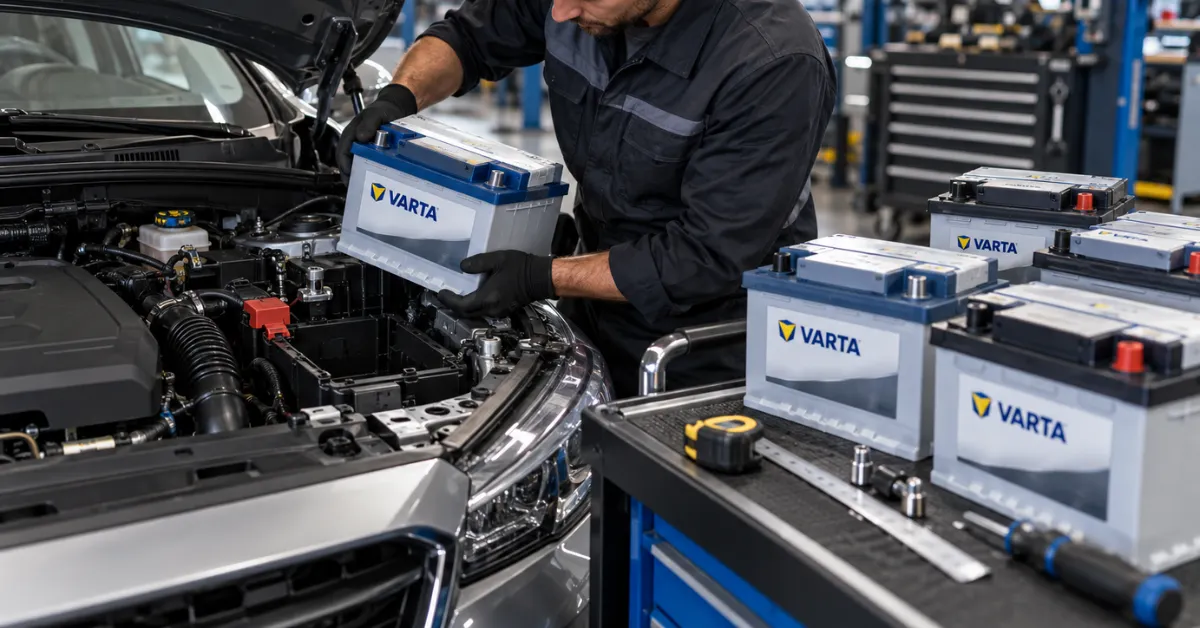
Finding the correct model is only one part of the replacement process. The old battery should be removed safely, the new one installed securely, and the vehicle's electrical system checked.
The technician should make sure the terminals are clean and tight and that the battery is properly secured in its tray. If required, the battery should also be registered or coded using suitable diagnostic equipment.
After installation, the charging voltage and electrical system can be checked. This helps confirm that the alternator and battery management system are working correctly and that the new battery is receiving the right charging conditions.
Conclusion
The Varta Battery Finder makes battery selection easier by narrowing the options according to your vehicle's make, model, year, and engine. However, the final check should also include battery technology, Ah capacity, CCA, dimensions, terminal position, and the vehicle's start-stop system.
Before you buy Varta battery products, compare the Finder result with your existing battery and vehicle requirements. If the information does not match, professional advice can prevent an incorrect replacement.
For drivers in the UAE, Battery Zone UAE can help with battery selection, testing, installation, and Varta battery replacement. Contact the team to find a suitable Varta battery for your vehicle and get professional installation support.
Battery trouble in Dubai? We come to you.
On-site testing, replacement and roadside help, 24/7 across the city.