
How to Test a Car Battery With an Analog Multimeter?
Maintaining a healthy car battery is essential for smooth vehicle operation. It ensures your car starts reliably and prevents unexpected breakdowns on busy roads. Regular checks can save time and avoid costly replacements.
Testing your car battery with an analog multimeter is simple and provides accurate insights into its condition. You can measure voltage, identify weak cells, and monitor overall battery health easily.
Whether you’re in Dubai, Sharjah, or nearby areas, this guide will help you understand your battery better, perform accurate tests, and take steps to extend its lifespan effectively.
What Is a Multimeter and How Does It Work in Cars?
A multimeter is a tool that measures electricity in your vehicle. It helps you check the battery, alternator, and fuses quickly. This device tells you if your car’s electrical system is healthy. Regular care ensures your engine starts in the heat. Watching for dim lights helps you act early.
In a car, it checks the voltage or electrical pressure. By touching probes to the battery, you see if there is enough power to start. This process is safe and very easy for any driver.
Modern cars rely on many electronics to run smoothly. A multimeter finds broken wires or weak connections in seconds. Using this tool protects your car’s computer and ensures your vehicle stays reliable.
Why Should You Regularly Test Your Car Battery?
Understanding how your vehicle generates and stores power is the first step toward stress-free driving. A car battery powers everything from ignition to electronics. Regular testing:
- Prevents unexpected breakdowns on busy roads
- Helps maintain long-term battery performance
- Avoids unnecessary replacement costs
Using an analog multimeter gives direct, precise readings, letting you understand your battery’s condition without relying solely on digital tools.
Essential Tools Needed for Analog Battery Testing
Gathering the right equipment ensures a quick and professional diagnostic check. These simple tools allow any driver to check their vehicle’s health with ease.
- Analog Multimeter: A high-quality meter with a clear needle scale for reading DC voltage.
- Insulated Probes: One red (positive) and one black (negative) cable to connect to the battery.
- Safety Gloves: To protect your hands from dirt or any battery acid residue.
- Wire Brush: Useful for cleaning any corrosion or white powder off the battery terminals.
- Clean Cloth: To wipe the battery surface for a better and safer connection.
- Safety Glasses: To ensure your eyes are protected while working near the engine.
Understanding Car Battery Voltage
Understanding these key numbers is the first step toward maintaining a reliable vehicle. Most car batteries are 12V lead-acid batteries. Key voltages to know:
- Fully Charged: 12.6V – 12.8V
- Slightly Discharged: 12.4V – 12.6V
- Critical Low: <12.4V may need recharging
- Severely Low: <11.8V indicates urgent replacement
Knowing these values helps interpret multimeter readings correctly. Monitoring these levels ensures your engine starts reliably in the UAE heat. Keeping your voltage in the correct range ensures your vehicle stays reliable for every journey.
Step-by-Step Guide to Test Car Battery with Analog Multimeter
Check your car battery’s health accurately using an analog multimeter. Follow these simple steps for long-lasting performance and safety.
Step 1: Set Up Your Analog Multimeter Correctly
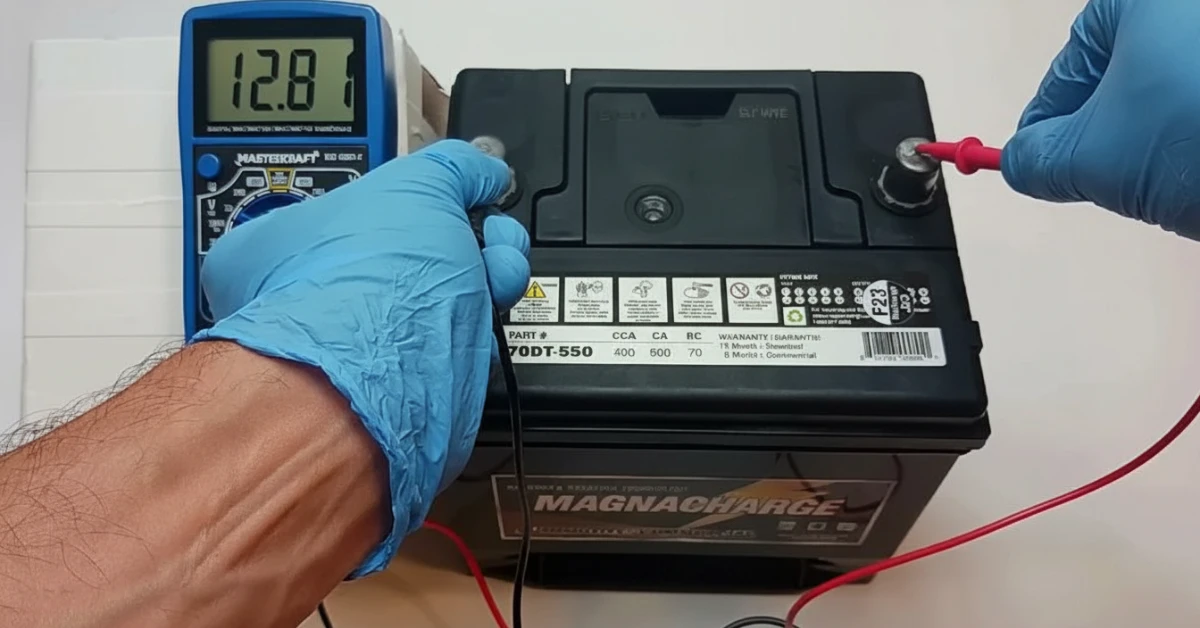
Set your multimeter to the 20V DC range for accuracy. Connect the red probe to the positive terminal and the black probe to the negative terminal. Ensure both probes are touching the metal surfaces firmly to get a steady reading.
Step 2: Measure Battery Resting Voltage
Check the needle position while the engine is completely off. A healthy battery should read between 12.6V and 12.8V on the scale. If the reading is below 12.4V, your battery likely needs a recharge soon.
Step 3: Load Testing for Deeper Insight
Turn on your headlights for two minutes to apply a real-world load. Watch the multimeter needle to see how much the voltage drops during this time. If the voltage falls below 12V, it is a strong sign that the battery cells are weak.
Step 4: Interpret Your Readings Accurately
A reading of 12.6V means your battery is in perfect condition and ready for the road. Any reading below 12.0V indicates the battery is failing and might be near its expiry. Always test when the car is cool to ensure the most reliable results.
Step 5: Maintain Your Battery for Long-Term Performance
Clean the terminals regularly to prevent rust and corrosion buildup from blocking the power. Take longer drives to allow the alternator to charge the battery cells fully. Use a multimeter to check the voltage every three months for consistent performance.
Step 6: Safety Tips During Battery Testing
Always wear protective gloves and safety glasses before starting any electrical work. Keep all metal tools away from the battery to avoid creating dangerous sparks. Never attempt to test a battery that shows visible signs of leaking or damage.
Expert Tips for Accurate Analog Measurements
Following professional techniques ensures your readings are precise and reliable every time you test. These small adjustments help you get the most accurate results from your analog device.
- Zero the Needle: Always adjust the calibration screw to ensure the needle points exactly to zero before starting.
- Avoid Parallax Error: Look at the meter straight from the front rather than from the side for an accurate reading.
- Check Connections: Ensure the battery terminals are clean and free of corrosion to allow for a steady flow of current.
Temperature Matters: Test your battery when the engine is cool, as extreme heat can temporarily inflate voltage readings.
Final Thoughts
Regularly monitoring your battery voltage is a simple way to ensure your vehicle remains reliable. These DIY tests help you avoid the stress of an unexpected breakdown. Quick checks prevent long-term damage to your alternator and electrical system.
A healthy battery ensures your engine starts reliably even in the heat. Being proactive identifies power issues before they become a serious problem on the road.
If your readings are consistently low, it is time for a professional car battery replacement to restore your vehicle’s performance. For expert assistance and high-quality services, visit Battery Zone UAE to keep your car ready for every journey.
Frequently Asked Questions
How long does a typical car battery last in the UAE?
Most car batteries in this region last between 2 and 3 years due to the extreme summer heat. High temperatures accelerate chemical reactions, leading to faster fluid loss and internal corrosion.
Can I test my battery immediately after driving?
It is best to wait at least 30 minutes after turning off the engine to get an accurate resting voltage. This allows the surface charge to dissipate, providing a true reflection of the battery’s actual state.
What should I do if my multimeter reading is exactly 12.2V?
A reading of 12.2V indicates that your battery is only about 50% charged and requires recharging. Consistent low voltage can lead to permanent damage, reducing the battery’s ability to hold power.
Is an analog multimeter better than a digital one for car batteries?
While digital models provide precise numbers, analog multimeters are excellent for watching real-time voltage drops. Both are effective, but digital versions are generally easier for beginners to read.
Why does my battery voltage drop when I turn on the headlights?
This is normal as the battery is now supplying power to a load. However, if the voltage stays below 12V while the lights are on, it suggests the battery is weak and may fail soon.
Can a car battery be revived if it reads below 10V?
A charger slowly restores the battery’s energy over several hours to provide a long-lasting charge. In contrast, a jump starter provides a sudden burst of high pow
A battery reading below 10V usually has a dead cell or deep discharge damage. While a specialized charger might help, installing a new unit is often the safest and most reliable solution for your vehicle.
er to start the engine immediately, but does not actually refill the battery.
How often should I check my battery health at Battery Zone UAE?
We recommend a health check every 6 months or before the peak of the summer season. Early diagnostics at Battery Zone UAE help you identify potential failures before you get stuck in the heat.