
The short answer
Car battery drain in winter results from reduced electrochemical activity, increased electrical load, and incomplete charge cycles. Even a 10°C temperature drop reduces battery capacity by 10% to 20%, making cold-weather starts unreliable. This guide covers the exact causes, warning signs, and prevention steps based on battery chemistry and real driving conditions in the UAE
Why Car Batteries Drain Faster in Winter: Key Causes Explained
Car batteries drain faster in winter due to several chemical and electrical reasons. Cold weather reduces battery output, while the vehicle needs more power at the same time. This combination leads to weak starts and faster discharge.
Reduced Chemical Reaction Inside the Battery
At 0°C, a fully charged battery loses around 30% to 35% of its usable capacity, according to research published in the Journal of Power Sources (Ning et al., 2006). This means a 60Ah battery effectively delivers only 39Ah to 42Ah under cold conditions.
The battery then struggles to deliver the required Cold Cranking Amps (CCA) needed for ignition. A typical passenger vehicle needs 400 to 600 CCA, but a cold battery may only supply 60% to 70% of its rated CCA value.
Increased Engine Starting Resistance
Engines require more effort to start in winter because engine oil thickens at lower temperatures. A 5W-30 oil can increase in viscosity by up to 3 times at 0°C compared to normal operating temperature, per SAE International viscosity standards (SAE J300).
Thicker oil increases internal mechanical resistance. The battery must then supply 200% to 300% more current than during a warm-weather start. Battery output decreases as engine demand increases. This imbalance is the primary electrical reason for battery drain during winter starts.
Higher Electrical Load During Winter
Winter increases electrical usage inside the car. Systems like rear defogger (120W to 300W), heater blower (150W to 250W), headlights (55W to 100W per bulb), and wipers (50W to 100W) all run together. Total load can exceed 600W, which puts extra pressure on both the alternator and battery.
Short Trips Prevent Full Charging
A battery needs 15 to 20 minutes of continuous driving above 50 km/h to recharge properly after starting. According to Battery Council International, short urban trips are a top 3 cause of battery failure. If trips are short, the battery stays partially charged. Lead sulfate crystals form on the plates. Over 6 to 12 months, capacity can drop by up to 50%.
Weak Alternator Charging Efficiency
The alternator should output 13.7V to 14.7V to charge the battery correctly. If it drops below 13.5V, the battery does not fully charge. Repeated low-voltage charging increases internal resistance and slowly reduces battery life. A battery with an internal resistance above 10 milliohms is considered weak.
Parasitic Battery Drain
Parasitic drain means power used when the car is off. Normal range is 20 to 50 mA. Anything above 80 mA is a fault. At 100 mA drain, a 60Ah battery loses 2.4Ah per day. It can reach 11.8V in about 18 to 22 days without driving. Common causes include alarm systems, ECU memory, dashcams, GPS trackers, and faulty wiring.
Age and Battery Condition
Battery life reduces with every charge cycle. In the UAE heat, the average lifespan is 2 to 3 years due to temperatures above 45°C, speeding up plate corrosion and electrolyte loss.
After 2 years, batteries may lose 20% to 40% of their storage capacity. Winter only exposes this weakness faster.
Effective Ways to Prevent Car Battery Drain During the Winter Season
Preventing car battery drain in winter requires managing charging cycles, electrical load, and ambient temperature effects on battery chemistry. A fully charged battery operates at 12.6V. In winter, performance drops quickly if charging is incomplete or electrical demand is excessive.
Maintain Proper Driving Cycles for Full Charging
Every engine cold start consumes 1% to 3% of total battery capacity. The alternator needs continuous driving time to recover this energy. A drive of at least 20 minutes at speeds above 50 km/h is required for effective recharging under normal alternator output.
If driving is limited to short urban distances, battery voltage gradually drops below 12.4V, sulfation begins forming on lead plates, and recovery becomes progressively harder without external charging support.
Combine multiple short trips into one longer drive to ensure the battery reaches a full charge state.
Control Electrical Load Immediately After Engine Start
Right after ignition, the battery is in its weakest state because it has just delivered 200A to 400A of cranking current. Using high-load systems immediately after start increases strain on the depleted battery.
Wait 2 to 3 minutes after starting before switching on the rear defogger, cabin heater blower, or high-beam headlights. This gives the alternator time to stabilize voltage output before additional loads are applied.
Monitor Battery Voltage and Charging Behavior
Voltage tracking gives direct insight into battery state of charge (SoC). Standard resting voltage values are as follows:
12.6V indicates 100% charge, 12.4V indicates approximately 75% charge, 12.2V indicates approximately 50% charge, and anything below 12.0V indicates a deeply discharged battery that may suffer permanent plate damage.
When the engine runs, normal alternator output is 13.7V to 14.7V. Voltage below 13.5V with the engine running means charging is insufficient, and the battery will gradually discharge over daily driving cycles.
Check battery voltage once per week using a digital multimeter. This simple habit prevents sudden failure by catching voltage decline early.
Prevent Sulfation Through Consistent Charging
Sulfation is the accumulation of lead sulfate (PbSO4) crystals on battery plates. It is the leading cause of battery failure worldwide, responsible for over 80% of early battery deaths according to the Battery Council International.
Sulfation begins when battery voltage stays below 12.4V for extended periods. It becomes semi-permanent when the voltage remains below 12.2V for more than 48 hours. Sulfation reduces usable battery capacity by up to 50% and significantly increases internal resistance.
Avoid leaving the battery in a partially charged state. Use a smart maintenance charger (desulfation mode) if the vehicle sits idle for more than 5 days.
Inspect and Clean Terminals for Optimal Current Flow
Battery terminals must allow clean, low-resistance current transfer. Corrosion buildup as thin as 0.5mm can increase terminal resistance by 0.2 to 0.5 ohms. This resistance reduces available cranking current by 15% to 25% during cold starts.
Signs of poor terminal connection include delayed cranking response, heat buildup at terminal contacts, and voltage drop exceeding 0.3V between battery post and cable end under load.
Clean terminals by disconnecting cables, applying a baking soda and water solution, scrubbing with a brass wire brush, rinsing with water, drying thoroughly, and reconnecting tightly. Apply anti-corrosion terminal grease after reconnection.
Manage Parasitic Drain Effectively
Normal parasitic drain in modern vehicles ranges from 20 to 50 mA. Anything above 80 mA is considered excessive and will visibly shorten battery life.
At 100 mA of drain, a standard 60Ah battery discharges by 2.4Ah per day. At this rate, the battery drops from 12.6V to below 12.0V within 10 to 14 days of non-use.
Common sources of excessive parasitic drain include faulty relays stuck in the closed position, always-on dashcams without voltage cutoff settings, aftermarket GPS trackers drawing above 30 mA, and ECU memory modules with software faults.
Conduct a parasitic draw test using a clamp-style milliamp meter if the battery drains without an obvious cause. Remove fuses one at a time to isolate the circuit causing excess draw.
Avoid Long Idle Periods Without Charging Support
Battery self-discharge rate is approximately 1% per day under normal conditions. This rate increases with parasitic load and higher ambient temperatures.
If a vehicle sits unused, voltage drops noticeably after 5 days, starting issues appear around the 10-day mark, and failure risk becomes high after 2 or more weeks without charging.
Start the car every 3 to 4 days and run the engine for at least 15 to 20 minutes at normal idle or light driving speed. Alternatively, connect a smart maintenance charger (also called a battery tender) to keep the battery at full charge without overcharging.
Ensure Alternator Efficiency Under Load
The alternator supplies current for both battery charging and active electrical systems simultaneously. A weak alternator forces the battery to cover the deficit, causing discharge even during driving.
Minimum required alternator output is 13.7V. The ideal charging range is 13.7V to 14.7V. Output below 13.5V indicates charging insufficiency. Output above 14.8V can cause overcharging and electrolyte boiloff.
Signs of a failing alternator include battery draining despite regular long drives, flickering headlights at idle, a battery warning light that appears intermittently, and a whining or grinding noise from the alternator pulley area.
Test alternator output with a digital multimeter at the battery terminals while the engine runs and all major electrical loads are active. Replace the alternator if output consistently measures below 13.5V under full electrical load.
Optimize Parking Conditions to Reduce Temperature Impact
Battery electrolyte activity slows as temperature drops. Every 10°C decrease in ambient temperature reduces battery capacity by 10% to 20%, as documented in battery thermal modeling research by Pesaran (2002) published in the Journal of Power Sources.
In UAE winter nights, temperatures in northern emirates can drop to 5°C to 10°C, which is enough to reduce battery output by 15% to 25% compared to daytime performance.
Park in covered or indoor locations whenever possible. Shaded daytime parking preserves battery temperature. Underground parking lots maintain more stable temperatures than open-air spaces.
Replace Aging Batteries Before Failure
Battery capacity degrades with each charge-discharge cycle. Most automotive lead-acid batteries are rated for 300 to 500 full charge-discharge cycles before significant capacity loss occurs, per IEC 60254-1 battery standard. Automotive battery performance testing follows SAE J537 specifications for cold cranking and reserve capacity ratings.
In UAE conditions, the average battery lifespan is 2 to 3 years due to high summer heat accelerating internal corrosion and water loss. After the 2-year mark, capacity often drops below 70% of the original rated Ah value.
If the battery consistently rests below 12.4V or struggles to hold a charge after a full charging session, replacement is more cost-effective than repeated jump-starting or maintenance charging.
Seasonal Battery Maintenance Tips to Extend Car Battery Life
Car battery performance changes with temperature, driving pattern, and electrical load. Without seasonal care, battery life reduces by 30% to 50% compared to a properly maintained battery.
Winter Maintenance Tips
Cold conditions reduce battery output and increase starting load. Even a mild UAE winter affects performance on cold mornings.
- Keep battery voltage at 12.6V at rest. This maintains stable starting power and slows sulfation formation during low-temperature nights.
- Drive continuously for 15 to 20 minutes. This allows the alternator to complete a full recharge cycle and restore State of Charge (SoC).
- Monitor the starting time regularly. Cranking above 2 seconds usually shows battery capacity has dropped below 70%.
Summer Maintenance Tips
High heat accelerates chemical reactions inside the battery and damages internal plates and separators.
- Park in shaded or covered areas. Temperatures above 40°C increase electrolyte evaporation and reduce battery life by 6 to 12 months.
- Check electrolyte level in non-sealed flooded batteries. Low electrolyte exposes plates and causes irreversible damage.
- Avoid overcharging. Voltage above 14.8V causes electrolyte boil-off and plate deformation.
Rainy or Humid Season Tips
Humidity increases terminal corrosion and affects electrical connection quality.
- Keep terminals clean and dry. Moisture increases contact resistance and reduces cranking current efficiency.
- Inspect terminals every 4 to 6 weeks. Loose or corroded joints can cause a 0.5V to 1.0V voltage drop during starting.
- Protect the battery area from direct water exposure. Surface moisture can create minor leakage paths across terminals.
Year-Round Maintenance Essentials
Basic maintenance improves battery life across all seasons.
- Check voltage monthly. Maintain 12.6V at rest and 13.7V to 14.7V while the engine runs.
- Inspect terminals every 3 months for tight and clean connections. This ensures full current flow during ignition.
- Drive regularly. A battery loses about 1% charge per day when idle.
Test the battery every 6 months using a load tester. Below 70% capacity (Ah) indicates a replacement requirement.
What to Do When Your Car Battery Dies Suddenly?
A dead car battery can fail without clear advance warning, especially in winter when battery efficiency is already reduced by 20% to 35%. Acting quickly and correctly restarts the car safely and prevents further electrical damage.
Immediate Steps to Take
- Stay calm and observe dashboard lights. Turn the ignition once. If dashboard lights are dim or absent, battery voltage is likely below 11.8V and cannot support starter motor engagement.
- Turn off all electrical systems. Switch off headlights, AC blower, rear defogger, and infotainment to reduce total load before attempting a restart. This gives the battery its best chance of delivering enough CCA for ignition.
- Wait 30 to 60 seconds and attempt ignition again. Brief rest allows minor surface charge recovery in partially discharged batteries.
- Use jumper cables if another vehicle is available. A successful jump-start is possible when battery voltage is above 10.5V. Connect positive to positive and negative to a metal ground point, not directly to the dead battery’s negative terminal.
- Keep the engine running for at least 20 to 30 minutes after a successful jump-start. This gives the alternator enough time to restore battery voltage above 12.4V.
- Contact roadside assistance if the vehicle does not respond after a jump-start. The battery may be fully discharged below 10V or internally damaged.
What to Avoid
- Avoid repeated ignition attempts in quick succession. Multiple cranking attempts drop battery voltage below 10V, making recovery harder and overheating the starter motor.
- Do not keep the lights or the AC on during a weak battery condition. Every watt of additional load increases discharge speed.
- Avoid incorrect jumper cable connections. Reversed polarity (positive to negative) can damage the ECU, alternator diodes, and other sensitive electronics instantly.
- Do not ignore a battery that fails more than once per week. This is a confirmed sign that the battery holds less than 50% of its rated capacity and needs immediate replacement.
- Do not drive immediately after a jump-start without checking the alternator output. If the alternator voltage is below 13.5V, the battery will drain again within 30 to 60 minutes of driving.
Professional Battery Support in the UAE
Car battery checks are important when the car shows slow starting, electrical delay, or ignition problems. These signs often mean voltage is below 12.4V, the alternator is weak, or the battery is older than 2 years.
Battery Zone UAE provides battery testing, charging system checks, and battery replacement across the UAE. The team uses load testing and voltage checks to find the exact problem before full battery failure.
Conclusion
Car battery drain in winter happens because low temperature slows down battery chemistry. The battery also faces higher load from lights, the heater, and short-trip driving. Even a 10°C drop reduces battery capacity by 10% to 20%.
To prevent failure, check battery voltage regularly. Drive at least 20 minutes so the battery can recharge properly. Keep terminals clean and tight to ensure a good connection. Replace the battery after 2 to 3 years to avoid sudden breakdowns. A well-maintained battery starts the car easily, gives stable power, and lasts longer in all seasons.
Frequently Asked Questions
How do I stop my car battery from dying in cold weather?
To prevent battery failure in cold weather, keep the battery at 12.6V resting voltage and avoid trips shorter than 15 minutes. Turn off all electrical systems before shutting the engine. Drive for at least 20 minutes at normal road speed to allow the alternator to complete a full recharge cycle.
How long does a car battery last in winter conditions?
A healthy car battery lasts 2 to 3 years in UAE-like climates and up to 3 to 5 years in cooler regions with proper care. Frequent short trips, summer heat above 40°C, and repeated deep discharges reduce this lifespan significantly.
Does idling charge a car battery in winter?
Yes, idling charges the battery, but at a very slow rate. At idle speed, the alternator produces limited current output (around 30% to 50% of maximum capacity). Driving at normal road speed is 2 to 3 times more effective for restoring battery charge.
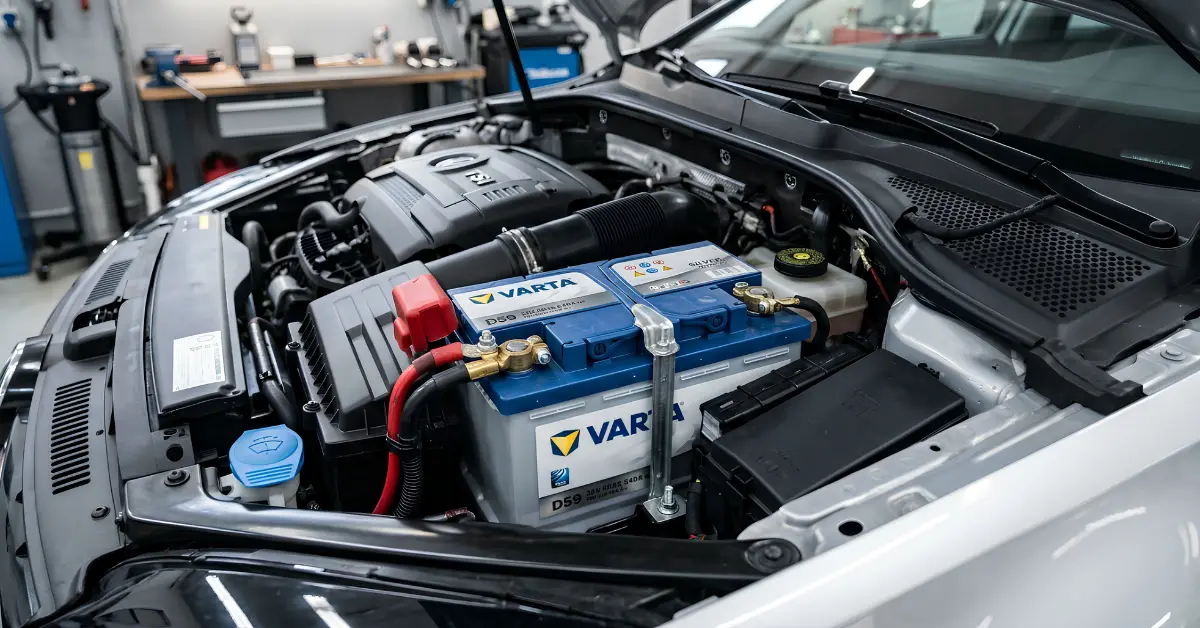
Varta’s AGM technology is designed for modern vehicles with start-stop systems.
Bosch is also a trusted option for broader vehicle compatibility across all categories.
What voltage indicates a weak car battery?
A weak car battery shows a resting voltage below 12.4V with the engine off. Voltage below 12.2V indicates the battery is at 50% charge or less and may fail to start the engine in cold conditions
How often should I drive my car in winter to avoid battery drain?
Drive the car at least 2 to 3 times per week in winter. Each session should last 20 to 30 minutes of continuous driving to allow proper alternator recharging above 12.6V.
How do you test a car battery at home?
Test a car battery using a digital multimeter set to DC voltage mode. A healthy battery reads approximately 12.6V with the engine off and 13.7V to 14.7V with the engine running. Readings below 12.4V at rest indicate partial discharge or capacity loss.
How can I extend my car battery life in winter?
Extend battery life by avoiding short trips, keeping terminals corrosion-free, and driving regularly for at least 20 minutes per session. Maintain resting voltage at 12.6V. Avoid leaving headlights or electronics on with the engine off. Use a maintenance charger during long periods of non-use.
Battery trouble in Dubai? We come to you.
On-site testing, replacement and roadside help, 24/7 across the city.