How Many Watts Does a Car Battery Hold
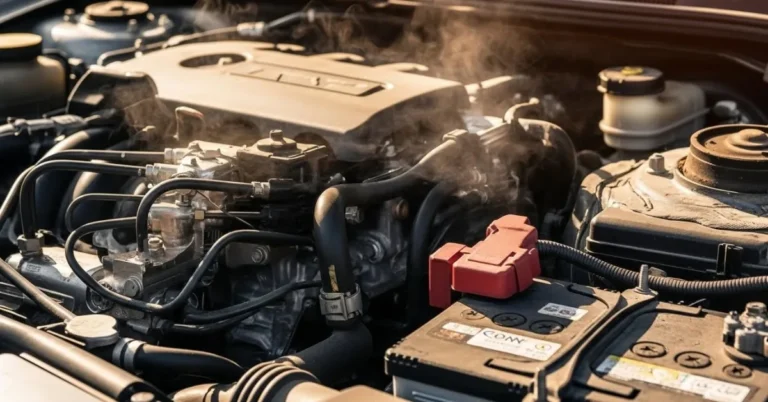
When you look at your car battery, you see a heavy plastic box with metal terminals. It looks simple, but inside, a complex chemical dance is happening to keep your car running. If you have ever wondered how much power is actually packed inside that box, you are asking about “watts.”
Understanding the wattage of your car battery is not just for scientists. It helps you know how long you can leave your headlights on or if you can plug in a laptop charger during a long desert drive. This guide breaks down the math into simple steps so you can understand your car’s energy like a pro.
The Simple Math: Amps, Volts, and Watts
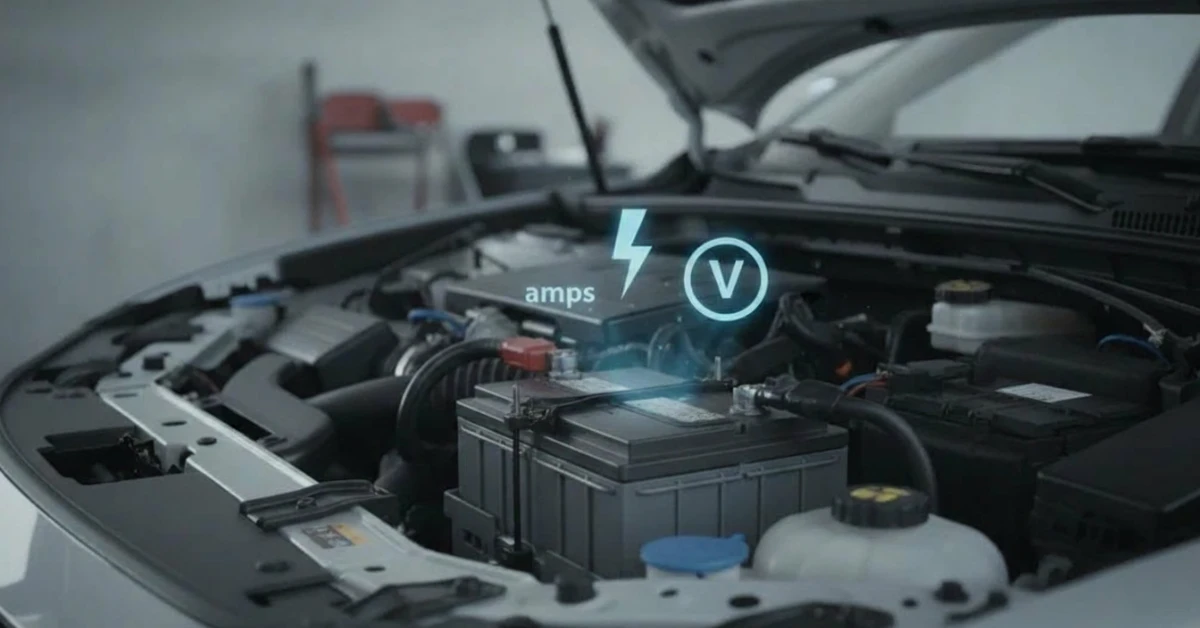
To find out how many watts your battery holds, we have to look at three different terms. Think of electricity like water flowing through a pipe:
- Volts (Voltage): This is the pressure pushing the water through the pipe. Most cars use a 12-volt system.
- Amps (Amperage): This is the amount of water flowing through the pipe.
- Watts (Wattage): This is the total power produced by the water and the pressure combined.
The formula is very simple:
Watts = Volts \times Amps
Applying it to Your Car
Most standard car batteries are rated in Amp-hours (Ah). A typical battery might be rated at 60 Ah. To find the total watt-hours ($Wh$), you multiply the voltage by the amp-hours:
12V \times 60Ah = 720 Wh
This means a standard battery holds about 720 watt-hours of energy. In plain English, it could power a 720-watt device for one hour, or a 1-watt device for 720 hours.
Why "Capacity" Matters in the UAE?
In the UAE, we push our cars to the limit. The high temperatures in Dubai and Abu Dhabi mean our batteries are often working in 40°C+ heat. Heat makes the chemical reaction inside the battery move faster, which can actually provide a slight boost in power initially, but it also causes the battery to wear out much more quickly.
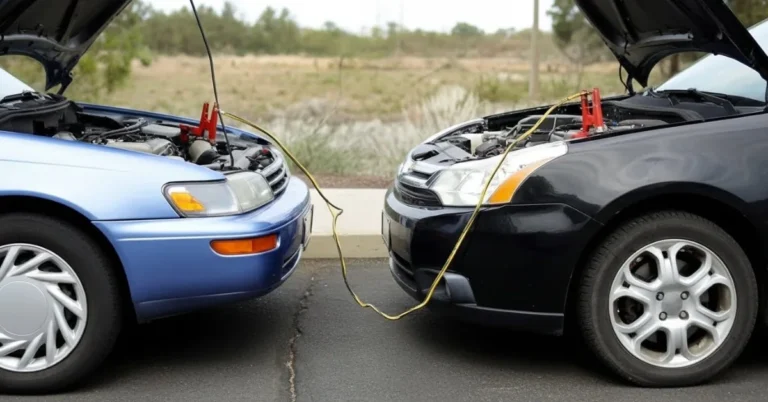
If your battery’s capacity drops too low, it won’t have enough “watts” to turn the engine over. When this happens, you might find yourself stranded and needing a car jumpstart to get moving again. Knowing your battery’s wattage helps you realize that your battery is a finite gas tank of electricity; once it’s empty, the car stays still.
Starting Watts vs. Running Watts
There is a big difference between the power needed to start a car and the power needed to keep it running.
1. Cranking Power (Starting)
Starting a car requires a massive “burst” of wattage. This is measured in Cold Cranking Amps (CCA). To start a typical V6 engine, your battery might need to put out 400 to 600 amps for a few seconds. Using our formula ($12V \times 500A$), that is 6,000 watts of power just to start the engine!
2. Reserve Capacity (Running)
Once the car is started, the battery doesn’t do the heavy lifting anymore. The alternator takes over. However, if your alternator fails, the battery has to power everything. This is called “Reserve Capacity.” If your alternator isn’t charging correctly, you may need to ensure your battery isn’t being drained of its watts while you drive.
How Long Can Your Battery Power Things?
If you are camping or parked and waiting for a friend, you might be using the battery’s watts without the engine running. Here is a rough estimate of how much power common car items use:
- Headlights: 100 Watts
- Car Radio: 20 – 50 Watts
- Interior Lights: 10 – 20 Watts
- Phone Charger: 10 Watts
- Dashboard Camera: 5 Watts
The Calculation
If you have a 720-watt-hour battery and you leave your 100-watt headlights on, how long until the battery is dead?
720 Wh / 100 W = 7.2 Hours
However, a car battery should never be drained to zero. If it drops below 50% capacity, it likely won’t have enough “kick” to start the engine. In reality, you only have about 3 to 4 hours of headlight use before you are stranded.
Factors That Change Your Battery’s Wattage
Not all 12-volt batteries are the same. Several things can change how many watts your specific battery can hold:
1. Battery Size (Group Size)
Physical size usually relates to capacity. A large battery for a 4×4 SUV will hold significantly more watt-hours than a tiny battery for a compact city car.
2. Battery Age
As a battery gets older, lead plates inside it start to degrade. An old battery might say “60 Ah” on the label, but it might only be able to hold 30 Ah. If your battery is more than three years old and struggles to hold a charge, it is usually time for a to avoid unexpected breakdowns.
3. Temperature
As mentioned, heat is the enemy. While heat increases the “speed” of electricity, it causes the fluid inside the battery to evaporate. A battery with low fluid cannot hold its full wattage capacity.
Wattage vs. Luxury Features
Modern cars in the UAE are like driving computers. They have cooled seats, massive touchscreens, GPS, and advanced safety sensors. All of these features eat up watts.
If you add aftermarket accessories, like a high-end sound system with a 1,000-watt amplifier, your standard car battery and alternator might not be able to keep up.
This can lead to “dimming” headlights or a battery warning light on your dashboard. Always check if your battery has enough reserve wattage before adding big electrical upgrades.
Tips to Save Your Watts
To make sure your battery always has enough power to start your car, follow these simple habits:
- Don’t listen to the radio with the engine off: Especially if you have a powerful sound system.
- Unplug chargers: Even when a phone isn’t connected, some chargers pull a tiny amount of “vampire” power.
- Clean the terminals: Corrosion creates resistance. Resistance makes the battery work harder to push those watts out.
- Short trips are bad: Your alternator needs about 15-20 minutes of driving to put back the watts used during the “start” phase. Frequent 5-minute trips will slowly drain your battery over time.
Final Thoughts
A car battery usually holds between 600 and 1200 watt-hours, depending on its size and health. While that sounds like a lot, the massive burst of energy needed to start your engine means you have to be careful about how you use that power when the engine is off.
Being aware of your battery’s limits is the best way to prevent being stuck in a parking lot. If you ever notice your car cranking slowly or your electronics acting strange, it’s a sign your “wattage tank” is running low. Regular checks through a professional like Battery Zone UAE and timely replacements will keep your car energized and ready for the road.